Tuesday, November 15, 2011

Moon as Metaphor

Lunar_libration_with_phase_Oct_2007_450pxHang on! This is not about astrology or New Age philosophy. I’m working on my personal timeline – again. I made a table timeline years ago, and refer to it often. This one is graphical. I took a tabloid-sized sheet of paper and drew a line across the center lengthwise, placing it in the center vertically. I divided the line into seven decades, since I’m working on my seventh one now. My plan is to add “light” memories, happy ones, above the line, and darker, painful ones below.

As I began jotting memories in, I realized it isn’t always clear which side to put them on. Some, like winning the Distinguished Thesis Award, were clearly on top. Others, like being emotionally ambushed by classmates in a grad school class (I’ve forgotten the subject, but not the event) are clearly way down in the dark field.

Few are that clear. The majority are basically happy, but nuanced. Becoming engaged, for example. I was a freshman in college in Texas at the time, and my fiancĂ© was in Cambridge, Mass. Although I was sincerely in love, thrilled at the elevation in my status, and relieved to have “landed my man” so easily and early, it wasn’t that perfect and simple. I was a bit sad about spending weekend evenings alone in my room studying or writing letters while most of the other girls in the dorm were out on dates. I did feel a bit of regret when a fellow I’d enjoyed dating earlier in the year asked me out again and I had to convince him I really was engaged. I sometimes wondered if I really knew what I was doing.

If I take the simple example of getting engaged, having that question popped and saying “Yes!”, or flashing that glittering stone, the memory goes high above the midline. If I take the entire cluster of memories, they scatter, with a fair number dipping below.

The implication for life story or memoir writing  is that writing about a single event, like getting that ring, will be short and sweet, and, well, trite. The story will be far more interesting if I include the full cluster of memories with reflections on my doubts and moments of angst. The shadows set off the highlights and amplify their meaning. Highlights give perspective to the dark times.

Looking down my timeline I notice that some periods shine forth brightly, lit with concentrated happiness and success. Conversely a few times, thankfully not too many, dense thunderclouds nearly obscured the sun.

Noting these cycles brought me to the metaphor of the moon and its phases. The moon is so predictable. On some clear nights, especially during the leafless season, it shines so brightly that color is dimly visible. (Cones, the eye receptors enabling us to see in very low light, are not sensitive to color.) Two weeks later the night will be inky, with varying degrees of moonlight between.

These cycles, these contrasts, are what make for compelling stories. Using the timeline is an effective way to find this contrast. Note memories for the period you’re writing about, and place them above or below the line. When you have the least hesitation, pull that memory out and break it down into components, placing each above or below the line. You may find that it expands into the far distant future, or reaches way back into your past.

Adding these details, these shadows, give depth to stories. They make it throb with life, placing it in the natural cycles of moon phases, seasons, breathing in and out, and our hearts’ squeezing and releasing to pump blood.

The shorter the story, the less opportunity for variation, but every story has room for a bit of depth. Longer ones, memoir length, may go through several cycles within the larger arc.

Write now: plot out a key memory from your past. Select a complex one, breaking it down into components and chart their locations above and below the neutral line. Then write the story.

Image credit: Wikipedia, creative commons license

Monday, November 7, 2011

Don’t Worry, Just Write It!

writer2

NAMW founder Linda Joy Myers has been busy posting about the memoir alternative for NaNoWriMo. In her most recent Memories & Memoirs blog post, she points out that this is National Life Writing Month. She posts four tips for writing a 50,000 word memoir draft this months in lieu of a 50,000 word novel.

Linda Joy has been extra busy. She also wrote a guest post for Nina Amir’s Write Nonfiction in November blog giving another eight tips to help you dig deeper as you write.

I suspect many writers are like me. It sounds fantastic to write an entire novel, memoir, or other nonfiction book in a single month – one of the busiest months of the year as it includes the Thanksgiving holiday and the onset of the December holiday madness. BUT … I already have three books underway, maybe four. Starting a new one seems counter-productive. So what can I do? Besides, the first week of the months is already history.

Here’s an idea: Maybe it’s cheating and maybe it isn’t. Who but me cares?

I could take the rest of the month and FINISH the memoir I started nearly two years ago. The one that’s been languishing, morphing in my mind. The one I think I know how to handle now, “when I have time to work on it again.”

Who am I fooling? When do I think I will I have time to work on it? I work on things when I decide to. When the muse whacks me hard enough to get my attention. I’m a big girl. I can make decisions. I already have about 18,000 words. That’s over 1/3. I should certainly be able to finish a draft in the remainder of the month.

I invite you to join me:

JUST WRITE!

Don’t worry about word count or ethics. Don’t worry about punctuation, grammar or even structure. Don’t worry about what your clothes or hair or make-up. Just write! By hand or computer. The idea is to complete a manuscript, from beginning to end. What better way to honor the intent than to finish a work in progress?

If your enthusiasm or motivation begins to wane, think of all the writers around the country – indeed the world! – who are feeling the same challenges, and get those fingers moving again. And sign up for the FREE NAMW roundtable discussion this Thursday, November 10, with Nina Amir and Denis LeDoux to hear more tips about writing a memoir.

Write now: think about your works in progress. Do you have a book-length one you’ve been meaning to get back to? Open that file and take a look. If you have at least 12,000 words there, you can easily finish in the allotted time. I invite you to take a deep breath, spend two hours a day, and blast through to the end.

Photo credit: Julie Jordan Scott

Wednesday, November 2, 2011

Giving Helpful Feedback

edit2

Kathy Pooler’s Memoir Writer’s Journey blog post, “The Art of Constructive Feedback in Writing and in Life”, blew me away. Everyone who works with children in any capacity should read her account of the way her grandson’s soccer coach interacts with his team. Everyone who works with people should read the post and pay close attention to the juxtaposition of that style with the feedback she got on an early writing assignment that shut her down for decades.

Her post especially hit the spot because I’ve been deeply reminded lately that strong writing – deep, meaningful writing – generally benefits from feedback of one sort or another, and yet awkwardly given feedback can do more harm than good. In an attempt to prevent such a negative outcome, writing classes I teach, I always give each student a copy of the follow  Feedback Ground Rules:

  • Stories you hear in this room stay in this room! This is crucially important for classes and writing groups to ensure people feel safe enough to share honestly and openly. This caution is not just about story content, it’s about writing skills. Who wants to run the risk that a fellow writer or student might blab to others the sort of thing your own Inner Critic is screaming? You need to respect everything about the writing process. If you want to share an amazing story, ask the author. Most likely the answer will be yes.
  • Be care-fully honest. Don’t white wash your feedback, but strive for compassion and tenderness when you point out aspects of a story that don’t work for you.
  • State at least two or three strong points for each piece. This may include memorable (velcro) words and phrases, a feature of the story structure, great description, moving content, anything at all.
  • Limit comments about needed improvements to the two or three most compelling ones. Respect each person’s need to grow writing skills gradually.
  • Avoid opinion — I like it, I didn’t like it, that was a great story. Opinion isn’t inherently bad, it’s just too easy to fall back on opinion rather than exert the mental effort to quantify why you liked or disliked a piece.
  • Tell how you felt about it — how it affected you. Were you inspired, amused, touched, saddened … ?
  • What worked especially well?
  • Did the story seem to be missing anything?
  • What one or two things can you suggest to make it even better?
  • Avoid the temptation to start telling related stories — make a note of them on your story idea list.

That last item is not specifically related to feedback, but it is a frequent sidetrack in classes and writing groups. I encourage people to keep paper handy to write these ideas down while they’re fresh so they can go home and write the stories.These same rules work with one-on-one critiquing, although in this case, you may do more line-editing. Find out from the author just what information he or she needs and wants. If it’s an early draft, there’s no point in pointing out every missing comma. Stick with conceptual and structural comments.

Should you find yourself in an unenlightened group and be subjected to a barrage of negativity, have a firm talk with your Inner Critic. Tell her something like “Consider the source. Some of those comments were valid, but I’m not going to throw the baby out with the bathwater, and I’m' not going to assume their mean spirits meant anything other than that they don’t know much about how to be helpful. I’ll keep writing.” You may bring this up with the group and suggest some ground rules (you are welcome to copy the ones above), or you may just find a new group.

Be kind with yourself and others, be patient with all concerned, and remember that neither writing nor feedback skills are mastered in a single sitting.

Write now: jot down some thoughts about feedback experiences you’ve had. Were they negative or positive? If they were negative, use the “Is it true” technique to explore the implications.

Monday, October 24, 2011

Matroyshka revisited

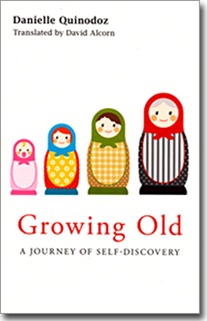
GrowingOldCoverMy August 16, 2009 post, “Layers of Life”, used a Russian  matroyshka doll as a metaphor for hidden or  embedded meaning in your life.

After reading Growing Old, by Swiss psychoanalyst Danielle Quinodoz, I realized the metaphor is equally powerful when turned inside out. The matroyshka is a perfect example of continuing to build the self over time, integrating new experiences and insights with that core of self developed in childhood. It’s essentially the inverse of the process I described earlier. From this perspective, the young child acquires experience and incorporates or integrates that experience to form an expanded worldview or sense of self.

Unfortunately, as Quinodoz reminds us, not everyone is adept at integrating experiences as they go along. Early in the book she makes the distinction between those who grow old actively and those who grow old passively. She sees the difference lying in the ability to integrate new experiences and approach life as a delightful, ongoing adventure. Those who are unable to do this live in a state of boredom and monotony. Those who live actively experience what she calls “small seconds of eternity” that closely resemble what others refer to as being “immersed in the moment” or the “now.”

Early in her career as a psychoanalyst, she bucked the prevailing convention that it was a waste of time to do analysis on anyone over the age of fifty. Much of her career has been devoted to the study of the elderly, and she has concluded that it’s never too late to help people develop an integrated view of their lives, to find the meaning in them. People with this sense of meaning live more fully and die more peacefully.

Although the book is totally focused on the psychoanalytic process, her explanations and case histories are clearly stated and easily understood by lay readers, and I read it with fascination. Part of that fascination was the realization that the process of discovering, challenging and integrating memories to find deeper meaning in life describes the process of writing memoir equally as well as psychoanalysis.

As an analyst writing primarily for other analysts, Quinodoz does not give a map for the process of analysis. If you take the psychoanalytical route to self-understanding, you select an analyst to guide you through the process. Writing memoir, the do-it-yourself route to enlightenment, may seem to be a solitary, totally do-it-yourself approach, but it doesn’t need to be so. Teaming up with at least one writing partner, taking classes, or working with a coach or therapist can help you become aware of conflicting beliefs, blind sp0ts in your writing, and areas where you need to do more processing work before integrating the material into the story arc of your life.

Both require a huge amount of time and introspection. Psychoanalysis requires a significant investment of cash. If you work with experts to discover or edit your story, memoir may also become expensive, but the primary value of memoir lies in the drafting rather than the crafting. Either route can yield transformative results.

 Write now: make a list of lessons you’ve learned at various points in life. Try arranging them in chronological order, leaving lots of space to one side. Use colored markers, crayons, or something colorful to draw links between related clusters of lessons. Look for patterns and interrelationships, and note any significant obstacles you overcame in learning a lesson. Keep this document to organize stories about the lessons.

Monday, October 17, 2011

Fear of Exposure

Secrets7I’ve done things in my life that I’m not proud of, and I’ve never told anyone about them. Do I have to write about those things in my lifestory?

I just read a memoir that left me with my mouth hanging open. I almost quit reading because of all the talk about sex, drugs and other stuff. Even if I’d lived through anything like that, I could never write about it. Is that what it takes to write a memoir?

This are typical questions about self-disclosure that I’m asked as a lifewriting coach and teacher. The simple answer is NO. If a subject gives you pause, respect that feeling. Don’t leave your comfort zone without good reason. The healthy thing to do is to write those stories in full detail. Spill your guts on the page, but keep it private at first. This will give you the health benefits of writing without the counter-acting stress of confrontations.

Once those stories are written, you have many options. You can burn the pages, or decide to delay sharing them. Depending on your relative ages, you may wait until those key players die to publish your work. But if you’re young and they aren’t old, another solution may be better. Here are a few considerations:

Look at the situation from other perspectives. You’ve probably only been thinking of this experience from your own point of view. Perhaps it looks quite different from the other person’s or the reader’s. Try experimenting by writing what you think the other person would say about it. You may find that it looks quite different, and your story may change as a result. This experiment may have additional value. In a recent IAJW member teleseminar James Pennebaker again emphasized that subjects in his research who adopted the most diverse points of view in their writing demonstrated the strongest health benefits.

Question your assumptions. Perhaps you overestimate the power of other people’s reactions. Perhaps some of your assumptions about what actually happened are a bit off-base. The techniques Byron Katie developed in The Work provide a simple process for challenging assumptions and beliefs.

Consider the value for readers. After reading several memoirs that were candid about the pain of feeling different during childhood, I’ve come to realize this is a much more common situation than I’d ever imagined, and I would not know that if those authors had not been brave enough to share their experience. As a result, I feel more comfortable openly joining their “club.”

Realize that reader attitudes are changing. Who doesn’t know that a vast sea of change has taken place over the course of a generation. My daughter’s generation could shock the socks off my mother’s with ordinary conversations among friends. They are more candid about nearly everything, and write accordingly. Even among those who are old enough to remember living conditions during World War II, many are disclosing things they would not have dreamed of telling fifty years ago.

Be compassionate with yourself. If you decide to admit to shortcomings or transgressions of various sorts, don’t just toss them out there and duck for cover. Include enough reflection to let the reader know what lessons you learned. Extend the same compassion and understanding to yourself that you would to a grandchild or any younger person who was feeling fears, pressures to conform, or general lack of insight similar to you experienced.

Never include anything simply for shock value. If, for example, your story involves sexual experiences, it’s okay to close the doors for privacy after the reader knows what’s going on behind them. Include only those details necessary to serve the purpose and move the story along.

These considerations barely brush the surface of this deep topic. For what promises to be a thought-provoking discussion about the issue of self-disclosure, sign up for the free NAMW telesummit on Friday, October 21 and dial in for the fourth session: Young Memoirists Talk about Truth, featuring Elisabeth Eaves, Nicole Johns, and Anna Mitchael. Everyone who signs up will receive an email link to listen to replays if you can’t dial in live.

Write now: think of a story you are afraid to share and work through the considerations above. You may still not want to share it, but I guarantee you’ll see the situation somewhat differently as a result.

Photo Credit: Wesley Oostvogels

Wednesday, October 12, 2011

Everyone Wins With Memoir

Memoirsofageisha
Last weekend at a panel discussion on various forms of electronic publishing, someone in the audience mentioned that the number of publishers listed as accepting fiction submissions in the current edition of Writer’s Market has shrunk dramatically from previous years. “Only a handful are interested,” she lamented.

This could be a sign of the turmoil currently swirling through the traditional publishing industry. Perhaps more significant is the surging shift of public preference toward memoir. It’s tippy to compare the memoir craze to the glut of reality show programming on television, but both feature presumably real people with the emphasis on real. Few people seriously believe reality shows aren’t scripted, but catch a memoir writer playing fast and loose with the facts, and the blogosphere conflagrates. People want to believe memoir is true. They relate to it.

Maybe the memoir mania springs from a sense of isolation due as people turn increasingly often to Facebook and text messages rather than personal contact. Memoir offers a sense of genuine connection with the author. Reading a memoir can offer hope to those in similar situations and reassurance to those who may see their own lives in a more positive light by comparison. Light or humorous memoir is pure fun to read.

Memoir may both entertain and benefit readers, but it benefits the author even more. I’m currently reading Growing Old, by Swiss psychoanalyst Danielle Quinodoz. The book focuses on the enormous value elderly people derive from reviewing their memories and attaining an integrated overview of their lives, for better or worse. Her observation is that people who are able to view their lives in this meaningful way experience more joy in living, especially in their last years. They tend to approach aging more actively, retaining curiosity and involvement with life and the people around them, and they are more likely to die peacefully and serenely.

As I read, I’m struck by the thought that this benefit of living more joyfully and meaningfully is available at any age, and although her focus is totally on psychoanalysis, the integrated overview she describes fits memoir perfectly.

I’ve written a number of posts here and on Writing for the Health of It about the physical and emotional health benefits of writing. The “raw” writing modes of freewriting and journaling are beneficial for exploration of specific issues. “Processed” writing in the form of stories and essays serve well to focus memories of events, people and reactions. Memoir draws on both raw and processed components to provide an integrated overview of a specific time or aspect of life, lending greater meaning and depth.

Psychoanalysis can lead to profound transformation for those who can afford it. The rest of us can invest in paper, pens, and maybe a few guidebooks (The Heart and Craft of Lifestory Writing is a great place to begin if you’re starting cold, and The Power of Memoir is superb). Taking a class, locally or online can help you hone your skills. You can enhance your results by joining a writing group specializing in life writing – start one if you can’t find one already meeting. Join an online group like the free Life Writers Forum or the National Association of Memoir Writers. Or find a writing coach to work with. You can work with a coach for a long time for a fraction of the cost of psychoanalysis.

However you do it, whether you publish your memoir or not, you’ll gain enormous perspective and insight on your life. You’ll win even if nobody ever reads it. But the time has never been better to publish your story. The publishing industry has never been more approachable, and the self-publishing option is wide open.

However you go about it, both you and your readers win with memoir.

Write Now: sign up for the NAMW Fall Telesummit

Photo credit: Lissalou66

Wednesday, October 5, 2011

Accessing Intuition

Swhite coverI recently wrote a review of Someone to Talk To,  Samantha M. White’s compelling memoir of her long process of building a life of serenity, love and happiness after falling into a pit despair when her young daughter died in a fatal car crash after a string of traumatic events. Since writing the review, Samantha and I have exchanged a number of emails about writing and memoir, and I’m delighted that she agreed to share the following thoughts as a guest post.

My rule for intuitive writing: While writing, don’t edit. Editing is the job of the brain; writing is the job of the heart. The heart knows no rules. Intuitive writing is what comes from the heart.

I believe the voice of my intuition has always been there, that we are probably all born with it. Parents, teachers, friends, and the media, in the process of “civilizing” us, overlay it with “rules” – lots of “don’ts” (”Don’t waste paper, don’t talk about others, don’t talk about sex,”) “always” (“Always stand up straight, always start a sentence with a noun phrase, always keep your prepositional phrases short,”) “never” (“Never wear white after Labor Day, never use an exclamation point at the end of a complete sentence”) and “shoulds” (A chapter should have a structure, contain action, a lady shouldn’t wear trousers in public,” etc.). I learned when I was still a teen-ager that cocktails were before dinner drinks, cordials were served after the meal. Red wine went with meat, white wines with chicken and fish. Those rules were as important as using the correct fork at the banquet table and sticking to the correct subjects in my speech and my writing. It was all part of the same very long list of Rights and Wrongs.

The rules were good to know, in order to not appear clumsy, gauche, or ignorant. But rules can pile up and eventually become so numerous that they hold the door to our intuition shut by their sheer weight. They become a barrier between us and our intuition, which is the free expression of our inner voice, our heart voice.

So accessing intuition, for me, was about judiciously discarding rules. In violation of what I had been taught, I wrote in incomplete sentences and about forbidden topics, and revealed my true self, weaknesses and strengths alike.

Does that suggest we would have better access to our intuition if we were not conscientiously “civilized” by our elders? Probably. But intuition without thought wouldn’t make for skill. I needed to know the rules AND to give myself permission to break them, first knowing, in every case, the reason why I was doing it, and measuring whether my action would cause anyone harm, and if it supported or violated my ethics and purpose.

So I guess my take on intuition is: know the rules of good writing, and then consciously put them aside and write from the heart. Write the initial drafts with confidence that they will never be seen by the reading public. Journal writing is especially valuable practice for accessing intuition, especially when we finally learn to trust that no one else is going to read it. Then we write as if we were talking to ourselves, telling ourselves only what is true and important, without regard for anyone else’s opinion of it. It helps open the door previously held shut by concerns of what others will think of us.

If writing for publication, go back afterward and check whether the writing conforms to good grammar, etc. Allow violations, but know the reason why. Always have an editor you can trust to both know the rules and respect your heart. The first step in writing a good paper, article, story, or book is to first write a “bad” one. It’s not really bad, of course, just probably in need of lots of good editing. Know the difference between editing and writing. Start with the writing.

Samantha M. WHite, MSW, LICSW, is a psychotherapist and life coach in private practice. She has earned college degrees in Pre-Med, Chemistry, Computer Science, and Social Work, achieving her most recent degree, the MSW, at the age of fifty-five. Her career has spanned the fields of medical research, education, health care administration, business and medical, hospice, and clinical social work, and she is a writer, educator, and public speaker. She lives in New England with her jazz musician husband, plays folk harp and percussion instruments, and enjoys kayaking on quiet rivers and ponds. Visit her website at http://www.samanthawhite.com/

Write Now: make a list of as many “rules” as you can think of that were uploaded into your head to govern your life. Then write a story about one of them, and how it has influenced you. Let intuition be your guide as you write, real and raw.

Preserve a Record of Life As It Was

Believe it or not, this post is not about politics. It’s about change. Regardless of your political position or beliefs, you’d have to be l...